

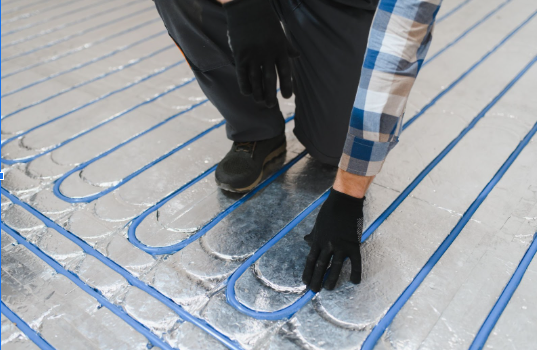
Radiant floor heating transforms cold, uncomfortable floors into sources of gentle warmth that enhance comfort throughout living spaces. These systems eliminate the unpleasant shock of stepping onto frigid tiles on winter mornings while providing efficient, evenly distributed heating that surpasses traditional forced-air systems. However, the performance and efficiency of radiant heating depend heavily on proper installation, and underfloor heating membranes represent critical components often underestimated in their importance. These specialized layers provide insulation, moisture protection, sound dampening, and installation facilitation. Understanding membrane types, functions, and proper selection ensures your radiant heating investment delivers optimal comfort and efficiency for decades.
The Critical Functions of Heating Membranes
Thermal insulation represents the primary function of heating membranes. Without insulation beneath heating elements, significant heat flows downward into subfloors or concrete slabs rather than upward into living spaces. This heat loss wastes energy, increases operating costs, and reduces system effectiveness. Quality membranes redirect heat upward where it’s needed, improving efficiency by 20-40% compared to installations without proper insulation. This efficiency directly translates to lower utility bills and faster warm-up times.
Moisture protection prevents damage to heating systems and floor coverings from ground moisture. Concrete slabs, particularly those on grade or in basements, transmit moisture vapor that can damage flooring materials and corrode heating elements. Integrated vapor barriers in quality membranes block this moisture migration, protecting investments in both heating systems and floor coverings. This protection proves particularly critical with moisture-sensitive materials like hardwood or laminate flooring.
Sound dampening provides acoustic benefits valued in multi-story homes. Footsteps on hard-surface floors create impact noise transmitting through structures to rooms below. Acoustic membranes absorb these vibrations, significantly reducing noise transmission. This benefit matters especially in condominiums or apartments where building codes often mandate minimum acoustic ratings. Even in single-family homes, reduced noise between floors improves overall comfort and privacy.
Types of Membranes for Different Applications
Cork membranes offer natural insulation combined with excellent acoustic properties. Cork’s cellular structure provides both thermal resistance and vibration dampening. The natural material appeals to environmentally conscious homeowners seeking sustainable options. Cork membranes work well under floating floors like laminate or engineered hardwood where their slight cushioning enhances comfort. However, cork costs more than synthetic alternatives and may compress over time under extremely heavy loads.
Foam membranes made from expanded polystyrene (EPS) or extruded polystyrene (XPS) provide cost-effective thermal insulation. XPS offers superior performance with higher R-values per inch and better moisture resistance than EPS. The closed-cell structure prevents water absorption—critical for below-grade installations. Foam membranes install easily, cut cleanly with utility knives, and accommodate minor subfloor irregularities. Their rigidity provides stable platforms for heating element installation.
Reflective membranes incorporate aluminum layers that reflect radiant heat upward. These thin membranes add minimal height to floor assemblies—advantageous when headroom is limited. However, reflective barriers provide limited conductive insulation, working best when combined with air gaps or other insulation layers. They excel in specific applications but rarely serve as sole insulation for radiant heating systems. Consider them supplemental to, rather than replacements for, proper insulation.
Composite membranes combine multiple materials maximizing various benefits. A typical composite might include foam insulation for thermal performance, integrated vapor barriers for moisture protection, and acoustic layers for sound control. These all-in-one solutions simplify installation by eliminating multiple separate layers. While more expensive than basic membranes, composites often prove economical when comparing total system costs including labor for multiple-layer installations.
Selecting Membranes for Specific Floor Coverings
Tile and stone installations over radiant heating benefit from membranes with high compressive strength. These heavy materials exert significant loads that can compress soft membranes, reducing their insulating effectiveness. Dense foam or specialized rigid insulation boards maintain their thickness and performance under these loads. Some membranes designed specifically for tile include textured surfaces improving mortar bonding or integrated uncoupling features preventing crack transmission.
Floating floors—laminate, engineered hardwood, luxury vinyl—require membranes accommodating their movement. These floors expand and contract with humidity and temperature changes. Membranes must allow this movement without restricting it, which could cause buckling or gapping. Many floating floor membranes include slight cushioning improving comfort underfoot while maintaining adequate thermal conductivity for effective heating. Verify that membranes carry manufacturer approvals for use with radiant heating and your specific floor covering.
For comprehensive selection of quality heating system components, explore collections of membrane for floating floor applications designed specifically for radiant heating compatibility. These specialized products balance thermal performance, moisture protection, and floor covering requirements, ensuring heating systems perform optimally while protecting floor investments.
Carpet over radiant heating creates challenges due to carpet’s insulating properties. Any membrane used must have minimal R-value to avoid excessive insulation that prevents heat reaching living spaces. Check radiant heating manufacturer specifications for maximum total R-value including carpet, pad, and membrane. Often, standard carpet padding must be omitted or replaced with minimal-thickness approved products when installing over radiant heat. Violating these limits results in ineffective heating and wasted energy.
R-Value Considerations and Optimization
Understanding R-value—thermal resistance—helps optimize membrane selection. Higher R-values provide better insulation but also slow heat transfer to living spaces, increasing warm-up times. The optimal R-value depends on what’s beneath your floor. Installations over unheated basements or crawl spaces need higher R-values (R-5 to R-10) preventing heat loss downward. Floors over heated spaces below need minimal insulation (R-0.5 to R-2) since heat loss isn’t problematic—warmth reaches occupied spaces regardless of direction.
Floor covering type affects membrane R-value selection. Tile and stone conduct heat efficiently, allowing higher membrane R-values without excessive warm-up times. Wood and laminate provide some insulation themselves, requiring lower membrane R-values to maintain reasonable response times. Total system R-value—membrane plus floor covering—determines performance. Calculate combined values ensuring they fall within heating system manufacturer specifications.
Climate considerations influence insulation needs. Colder climates with significant heating seasons justify higher R-value membranes through greater energy savings. Moderate climates using radiant heating primarily for comfort rather than primary heating need less insulation. Excessive insulation in mild climates extends warm-up times unnecessarily, reducing the system’s convenience and appeal. Match insulation to actual climate conditions and heating demands.
Installation Over Different Substrates
Concrete slab installations represent ideal radiant heating applications. The thermal mass stores heat, providing gentle, sustained warmth even after heating cycles end. Membranes must include vapor barriers preventing moisture from slabs reaching heating elements and floor coverings. Install membranes with all seams overlapped and taped creating continuous moisture barriers. Some installers prefer separate polyethylene vapor barriers beneath insulating membranes for redundant moisture protection.
Wooden subfloor installations require ensuring adequate strength and rigidity. Floor assemblies must not deflect excessively under loads—deflection can crack tile or damage heating elements. Minimum 1-1/8 inch total subfloor thickness with joists spaced maximum 16 inches on-center provides adequate rigidity for most applications. Some situations require additional plywood layers or smaller joist spacing. Consult structural engineers for installations over particularly long spans or in high-load areas.
Existing floor covering removal versus installation over existing floors involves tradeoffs. Removing old flooring allows proper substrate preparation and minimizes height increases. However, removal adds costs and project timelines. Installing over sound existing floors saves time and money but increases finished floor height, potentially creating issues with door clearances, appliance fits, and transitions to adjacent rooms. Evaluate these factors based on specific circumstances and priorities.
Integration with Electric Heating Systems
Electric mat systems incorporate heating cables into mesh mats simplifying installation. Membranes beneath these mats provide insulation and smooth substrates. Unroll mats over membranes following manufacturer layouts, securing with approved adhesives or staples (for wooden subfloors). The thin profile—typically 3-4mm—minimizes floor height increases. Electric mats work excellently for bathroom, kitchen, and individual room installations where dedicated heating circuits are practical.
Loose-cable systems offer maximum flexibility for irregular room shapes or custom heat distribution. Install membranes first, then layout cables in serpentine patterns at specified spacing. Clips, tape, or specialized membrane textures secure cables during subsequent floor covering installation. This method requires more planning and installation time than mat systems but accommodates any layout. Loose cables work well for large areas or where mat dimensions don’t fit efficiently.
Thermostat and sensor placement affects system performance significantly. Position floor temperature sensors between heating cables using conduits allowing future replacement without floor demolition. Install sensors far enough from walls to measure actual floor temperatures rather than edge effects. Program thermostats carefully—excessive temperatures damage floor coverings while insufficient heat wastes the system’s potential. Most systems operate optimally with floor temperatures between 75-85°F depending on floor covering type.
Hydronic System Considerations
Hydronic systems circulating heated water through PEX tubing provide superior efficiency for large areas. These systems require more substantial membranes supporting tubing and distributing loads from floor coverings above. Specialized panels with raised bosses or channels secure tubing without additional fastening. These systems add more height to floor assemblies than electric systems—typically 1-2 inches including tubing, embedment, and membranes.
Tubing layout affects heat distribution uniformity. Closer spacing provides more heat—typical spacing ranges from 6 to 12 inches depending on heat loss calculations. Perimeter zones near exterior walls often use tighter spacing compensating for greater heat loss. Hydronic systems’ slower response times compared to electric heating make them better suited for maintaining constant comfort rather than intermittent heating. The thermal mass works advantageously for steady-state heating.
Hydronic systems’ complexity typically warrants professional design and installation. Calculations determining tubing lengths, pump sizing, heat exchanger requirements, and control systems require expertise. Improper design results in inadequate heating, excessive energy consumption, or system reliability issues. However, properly designed hydronic systems provide the most cost-effective operation for whole-house heating applications, justifying upfront design and installation investments.
Sound Control and Acoustic Performance
Impact Insulation Class (IIC) ratings quantify sound dampening effectiveness. Higher ratings indicate better performance—IIC 50 represents minimum acceptable performance for most applications, while IIC 60 or higher provides excellent acoustic isolation. Building codes in multi-family dwellings often mandate minimum IIC ratings. Acoustic membranes specifically designed for sound control achieve high ratings through materials and construction optimized for vibration absorption.
Installation details significantly affect acoustic performance. Acoustic membranes must cover entire floor areas without gaps. Perimeter gaps allow sound flanking around membranes, dramatically reducing effectiveness. Acoustic sealants or resilient edge strips at room perimeters prevent sound transmission through gaps. Proper installation attention to these details determines whether membranes achieve their rated performance or fall short.
Combined thermal and acoustic performance represents ideal membrane characteristics for many installations. Products providing both functions eliminate needs for separate layers, reducing total floor assembly thickness while simplifying installation. These dual-purpose membranes cost more than basic insulation but often prove economical compared to separate thermal and acoustic layers when considering both material and installation labor costs.
Moisture Management and Vapor Barriers
Vapor barrier requirements depend on substrate moisture conditions. Concrete slabs on grade or below grade almost always require vapor barriers preventing ground moisture migration. Wooden subfloors over ventilated crawl spaces or above heated spaces typically don’t need vapor barriers. Test concrete moisture using calcium chloride or relative humidity tests before installation—moisture levels exceeding manufacturer limits require barriers regardless of assumptions.
Barrier installation requires attention to detail creating continuous protection. Overlap all seams minimum 6 inches, sealing with vapor barrier tape rather than standard packaging tape. Extend barriers up walls several inches, sealing to wall membranes or covering with baseboard trim. Seal around all penetrations—plumbing pipes, electrical conduits, floor drains—with appropriate sealants or boots. Incomplete barriers allow moisture migration through gaps, negating protection elsewhere.
Breathable versus impermeable barriers represent different approaches to moisture management. Impermeable polyethylene sheets provide absolute barriers blocking all moisture transmission. Breathable membranes allow controlled moisture vapor transmission, preventing accumulation beneath floors while blocking liquid water. Selection depends on specific conditions—breathable membranes work well when some moisture transmission is desirable; impermeable barriers suit high-moisture environments.
Installation Best Practices
Substrate preparation determines membrane performance. Clean substrates thoroughly removing dirt, debris, and contaminants. Repair cracks, holes, and damage. Level significant irregularities—while membranes accommodate minor imperfections, major irregularities telegraph through causing problems. Self-leveling compounds correct concrete slab irregularities; plywood or additional layers stiffen wooden subfloors. Time spent on preparation prevents numerous problems manifesting later.
Proper cutting and fitting eliminate gaps and overlaps. Measure carefully, cutting membranes slightly short at perimeters leaving expansion gaps at walls. Butt adjacent pieces tightly without forcing overlaps creating thickness variations. Some membranes require adhesives; others simply lay in place beneath subsequent layers. Follow manufacturer instructions precisely—improper installation voids warranties and compromises performance.
Protecting installed membranes during subsequent construction prevents damage. Cover membranes with protective materials if foot traffic or construction activity occurs before floor covering installation. Tears, punctures, or compression damage reduce insulation effectiveness and moisture protection. Repair any damage immediately using manufacturer-approved methods and materials. Prevention and prompt repair maintain membrane integrity and system performance.
Testing and Commissioning
Pre-installation testing of electric heating elements ensures they’re undamaged before embedding in mortars or adhesives. Measure resistance with multimeters confirming values match manufacturer specifications. This baseline measurement provides reference if problems arise later—comparing current resistance to installation readings indicates whether damage occurred. Document these readings as permanent installation records.
Hydronic systems require pressure testing before covering. Fill systems with water or air to specified pressures, monitoring for pressure drops indicating leaks. Address any leaks before proceeding with floor covering installation. Some installers prefer maintaining pressure during mortar or self-leveling compound application, ensuring leaks become immediately obvious. This vigilance prevents discovering leaks after floor covering installation when repairs require demolition.
Gradual system startup protects installations while verifying performance. Don’t immediately set thermostats to maximum temperatures. For tile installations, wait until mortars fully cure—typically 28 days—before activating heating. Then increase temperatures gradually over several days, allowing materials to acclimate to heat without thermal shock. Monitor system performance during startup, verifying all zones heat properly and temperatures reach desired levels within reasonable timeframes.
Long-Term Maintenance and Troubleshooting
Properly installed radiant heating requires minimal maintenance. Electric systems have no moving parts requiring service. Hydronic systems need annual inspections of pumps, valves, and pressure levels—tasks homeowners or HVAC technicians can perform. Monitor energy consumption—significant increases may indicate system issues like pump failures or controls malfunctioning.
Cold spots indicate heating element damage or control issues. For electric systems, resistance testing identifies damaged circuits. Thermal imaging cameras locate problem areas without invasive investigation. For hydronic systems, check that valves are open and pumps circulate properly. Air trapped in tubing causes cold spots—bleeding air at high points resolves this common issue.
Temperature inconsistencies between zones suggest controls or distribution problems. Verify thermostats function properly and sensors read accurately. For hydronic systems, balance flow rates between zones using manifold valves. Document initial settings and adjustments—this information helps troubleshoot future issues. Professional assistance may be necessary for complex problems, but understanding systems allows intelligent conversations with service technicians.
Underfloor heating membranes represent critical investments in radiant heating system performance and longevity. Proper selection and installation ensure your comfort heating system operates efficiently, effectively, and reliably, delivering decades of gentle warmth that transforms cold floors into sources of daily comfort and satisfaction.
