

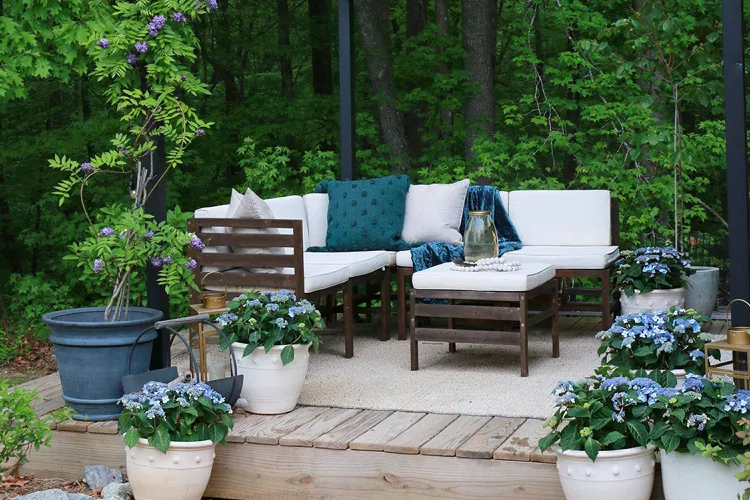
A breezy yard can feel pleasant until gusts start moving cushions, cooling food, or making conversation difficult. Backyard windbreak ideas work best when they slow air rather than trying to create a completely sealed outdoor room.
Plants, screens, fences, walls, and small structures can all help, but their position matters as much as their height.
Find Where the Wind Actually Enters
Spend several days observing the yard before building anything permanent. Wind may funnel through a side passage, arrive across an open neighboring lot, or accelerate between the house and a detached garage.
A windbreak placed too far from the seating area may have little effect. One positioned directly against the chairs can create turbulence rather than calm air.
Look for Seasonal Differences
Summer breezes and colder-season winds may come from different directions. If the patio is used for much of the year, plan around the most disruptive recurring wind rather than a single windy afternoon.
Use Partial Screening Instead of a Solid Barrier
Slatted timber panels, lattice, perforated metal, and dense planting can reduce wind while still letting some air pass through. This often creates a calmer zone than an entirely solid wall.
People planning several outdoor zones together may find backyard water features useful as another reference point when thinking about how recreational areas and seating spaces fit into a larger yard.
Combine Plants With Built Structures
A layered windbreak can feel softer than a tall fence alone. An evergreen hedge behind a lower screen, for example, can slow wind at several heights while maintaining a garden-like appearance.
Ideas connected with cabin-inspired exterior spaces can also provide useful visual direction when mixing timber, planting, and sheltered seating areas.
| Windbreak Type | Best Feature | Watch For |
|---|---|---|
| Slatted screen | Filters strong gusts | Needs secure posts |
| Evergreen hedge | Natural year-round cover | Takes space to mature |
| Masonry wall | Durable protection | Can cause turbulence |
| Mixed planting | Soft layered effect | Requires maintenance |
Protect the Seating Zone Without Closing It In
Wind protection should preserve useful views and circulation. A screen beside a sofa may be more effective than fencing the entire yard, especially where only one exposed corner causes trouble.
If the improvement is part of wider residential property planning, consider how the windbreak will relate to boundary fences, gates, drainage, neighboring sightlines, and future landscape changes.
Freestanding planters can help in smaller spaces, although they need enough weight to remain stable. Tall containers are most useful when combined with dense, wind-tolerant planting.
Mistakes That Can Make Wind Problems Worse
Building the tallest possible solid wall isn’t always the answer. Air can rise over a solid barrier, accelerate around its ends, and tumble down on the protected side.
Another mistake is using lightweight decorative screens without adequate anchors. If a panel is large enough to catch substantial wind, treat its supports seriously. Local building requirements may also apply to taller fences, walls, and permanent structures.
Frequently Asked Questions
How tall should a backyard windbreak be?
The right height depends on the seating area and wind direction. In many yards, a screen only slightly taller than seated head height can make a noticeable difference without dominating the landscape.
Are plants effective for blocking wind?
Dense shrubs, hedges, and closely planted small trees can reduce wind effectively, especially when foliage extends close to ground level. Their performance improves as planting matures.
Is a solid fence better than a slatted screen?
Not necessarily. A slatted or partially open screen allows some air through, which can reduce the strong swirling and downdrafts sometimes created behind solid barriers.
Create a Calmer Outdoor Sitting Area
Start with the direction of the troublesome wind and protect the seating zone rather than automatically enclosing the whole backyard. A well-placed screen, hedge, or layered combination can soften gusts while preserving light and airflow. Secure everything properly and leave enough openness that the patio still feels connected to the surrounding garden.
